
 917-426-8177
One Manhattan apartment move can involve two buildings, two management contacts, and two sets of rules. Here is what to confirm at both addresses before moving day.
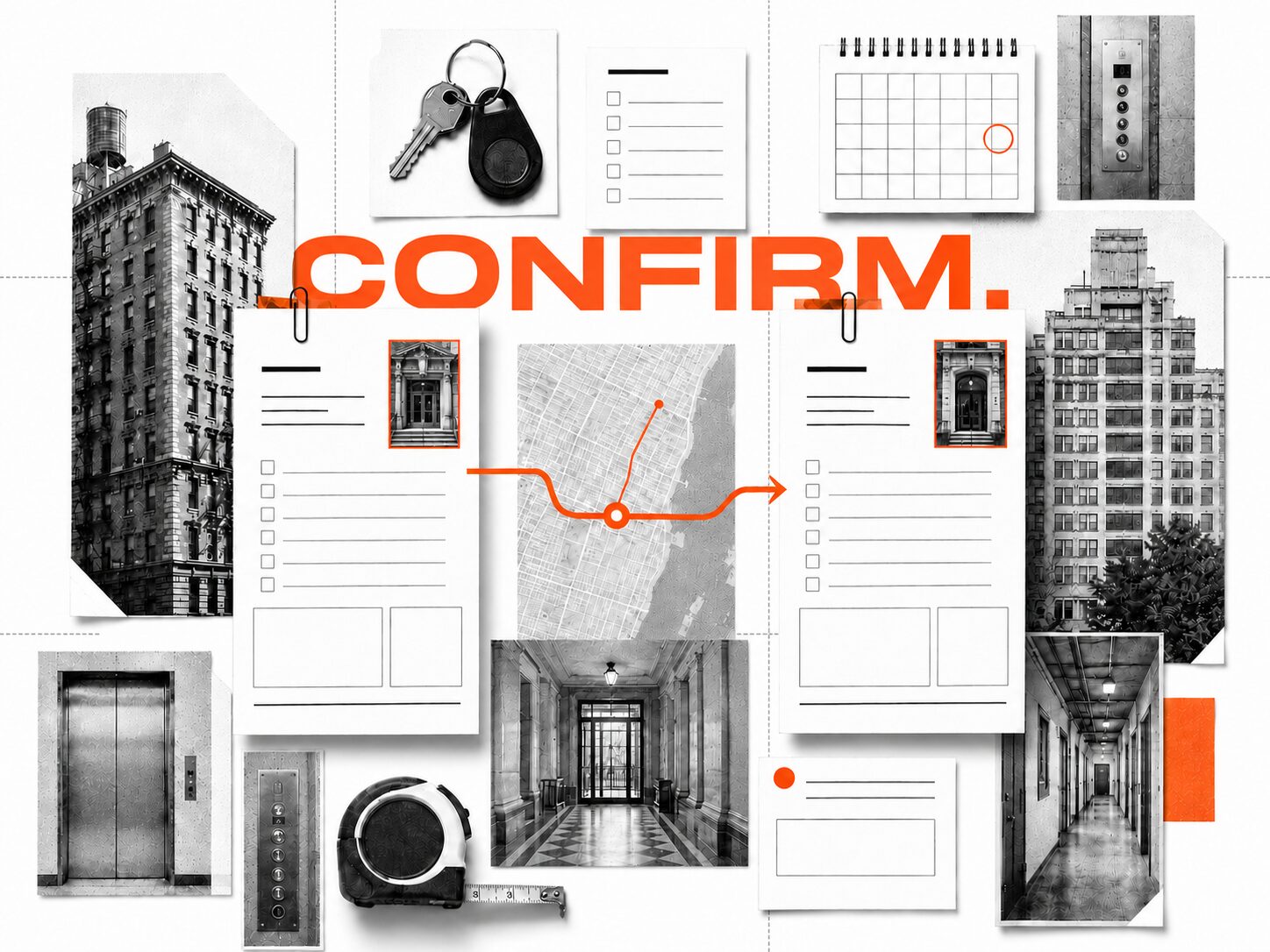
Your move date is on the calendar. Then the building asks about approved hours, elevator access, insurance paperwork, or a service entrance you have never used. The destination building may send a completely different list.
That is the real planning problem behind Manhattan building moving requirements: one apartment move can involve two properties, two management contacts, and two sets of rules. Before moving day, create one packet that records the requirements for both addresses. Confirm the management contact, approved time window, elevator and loading route, service entrance, access dimensions, keys or fobs, requested documents, and written approval status.
One Manhattan Apartment Move Can Have Two Rulebooks
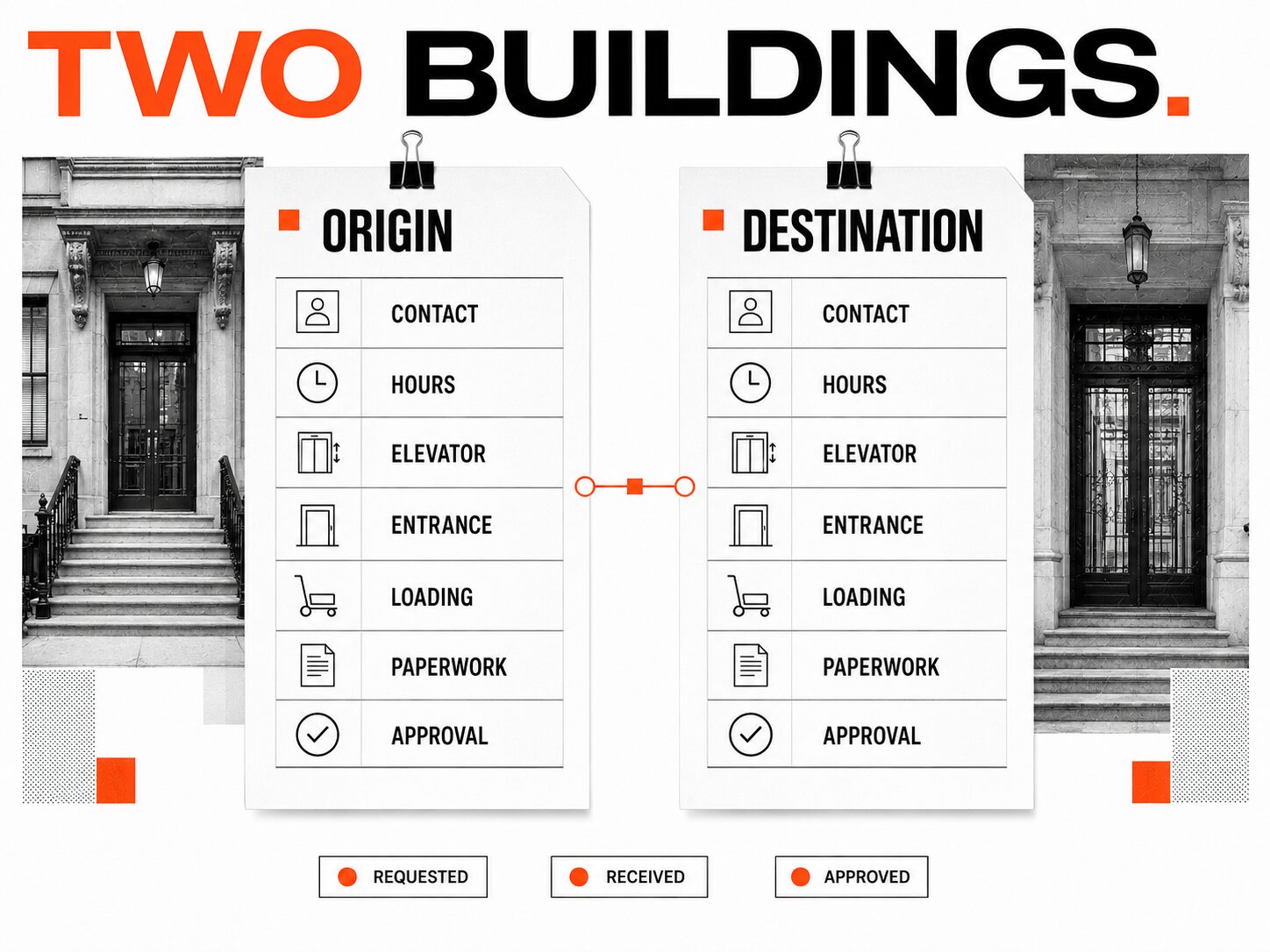
The origin building controls how the move leaves. The destination controls how it enters. Do not assume that approval at one address tells you anything about the other.
One property may direct movers through a freight elevator and loading area. Another may use a service entrance connected to a passenger elevator. A doorman, superintendent, resident manager, management office, or outside property manager may control the approval. Even the meaning of “approved” can differ.
This is why a broad Manhattan apartment moving checklist is not enough. You need a two-building requirement sheet that preserves the exact instructions for each location. If you are still planning a Manhattan apartment move, build this sheet before access details disappear inside long email threads.
Build the Packet Around Status, Not Memory
For every requirement, use three status labels:
- Requested: You asked the correct contact for the building's instructions.
- Received: You received the policy, form, email, or answer.
- Approved: The building confirmed that the requirement was satisfied.
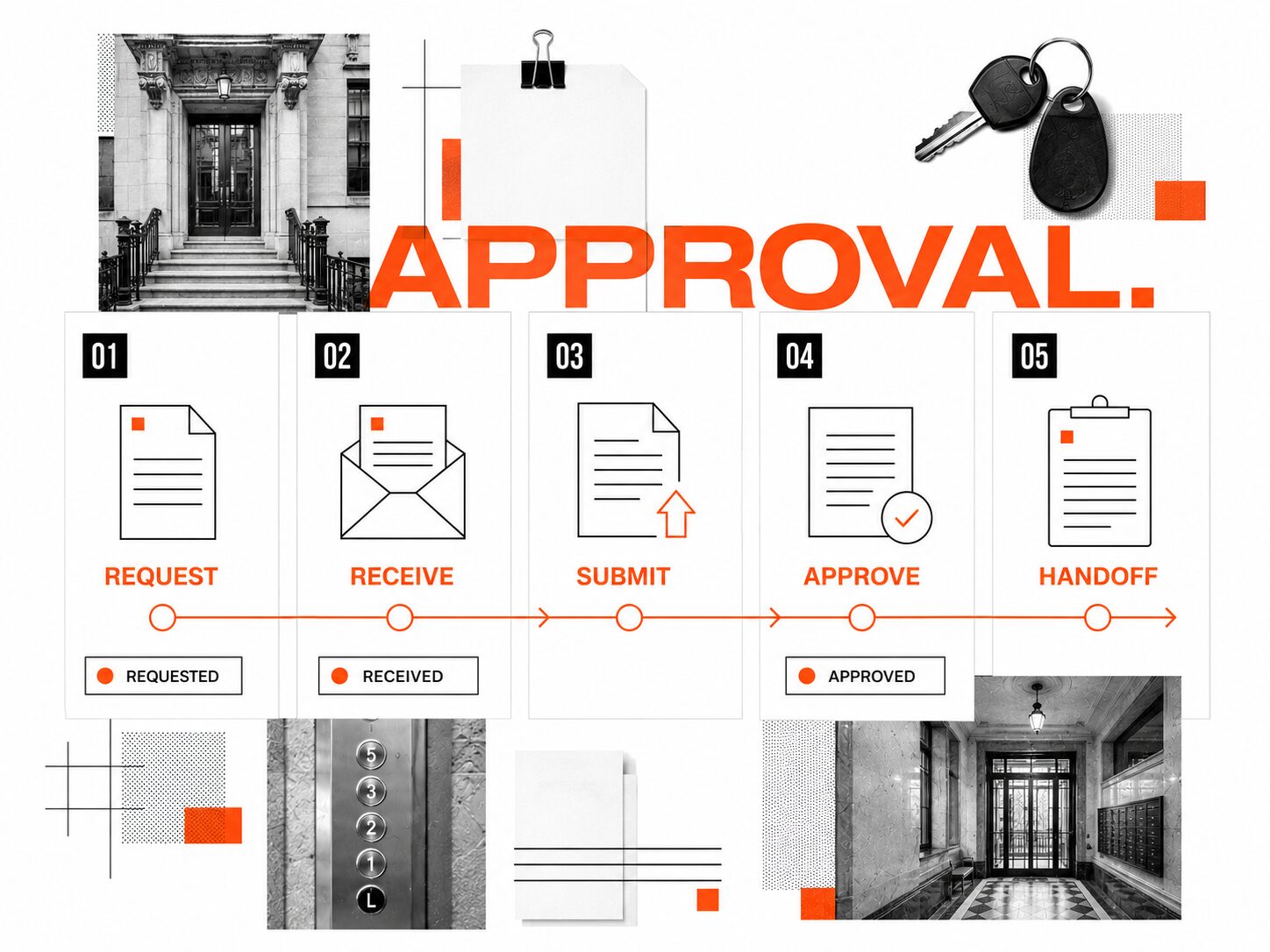
“Sent” is not the same as “approved.” An elevator request may be waiting for confirmation. A document may have been submitted but returned for a correction. A time discussed by phone may not be the final reserved move-out window.
Add the date, time, and name of the person who confirmed each approval. Save the original email or form with the packet. This creates a clean record for the resident, building contact, and moving team without turning verbal assumptions into instructions.
Once your building details are organized, start your moving quote and include the access details for both addresses.
Confirm the Approval Chain at Both Addresses
Start with the person who can issue or verify the building's moving rules. Ask management who owns the process if the answer is unclear.
Record these fields separately for the origin and destination:
- Building or management company name
- Primary management contact and role
- Email and phone number supplied for move coordination
- Day-of building contact, if different
- Person authorized to approve the elevator, loading area, or service entrance
- After-hours escalation contact, only if the property provides one
- Final written approval date and method
Do not rely on a leasing agent, broker, neighbor, or front desk employee unless management identifies that person as the correct contact. Helpful guidance is not automatically formal approval.
Lock the Approved Date, Hours, and Elevator Details
Write down the exact date and approved access window for each property. Avoid shorthand such as “morning” or “business hours.” Record the start time, end time, check-in time, and any stated cutoff.
For a freight elevator reservation or another assigned elevator, confirm:
- Which elevator may be used
- Where movers check in
- Whether building staff must place the elevator in service mode
- When elevator access begins and ends
- Whether the origin and destination windows are compatible
- What happens if the reservation changes
- Who provides final confirmation
Do not publish or plan around a universal Manhattan moving schedule. Move-out hours are property-specific. Your packet should repeat the building's actual wording and show whether the reservation is requested, received, or approved.
Map the Service Entrance, Loading Point, and Indoor Route
The street address is not always the working entrance. Ask for the exact service entrance address, side of the building, nearest cross street, loading area, garage entrance, or dock instructions. If management provides a diagram, place it in the packet.
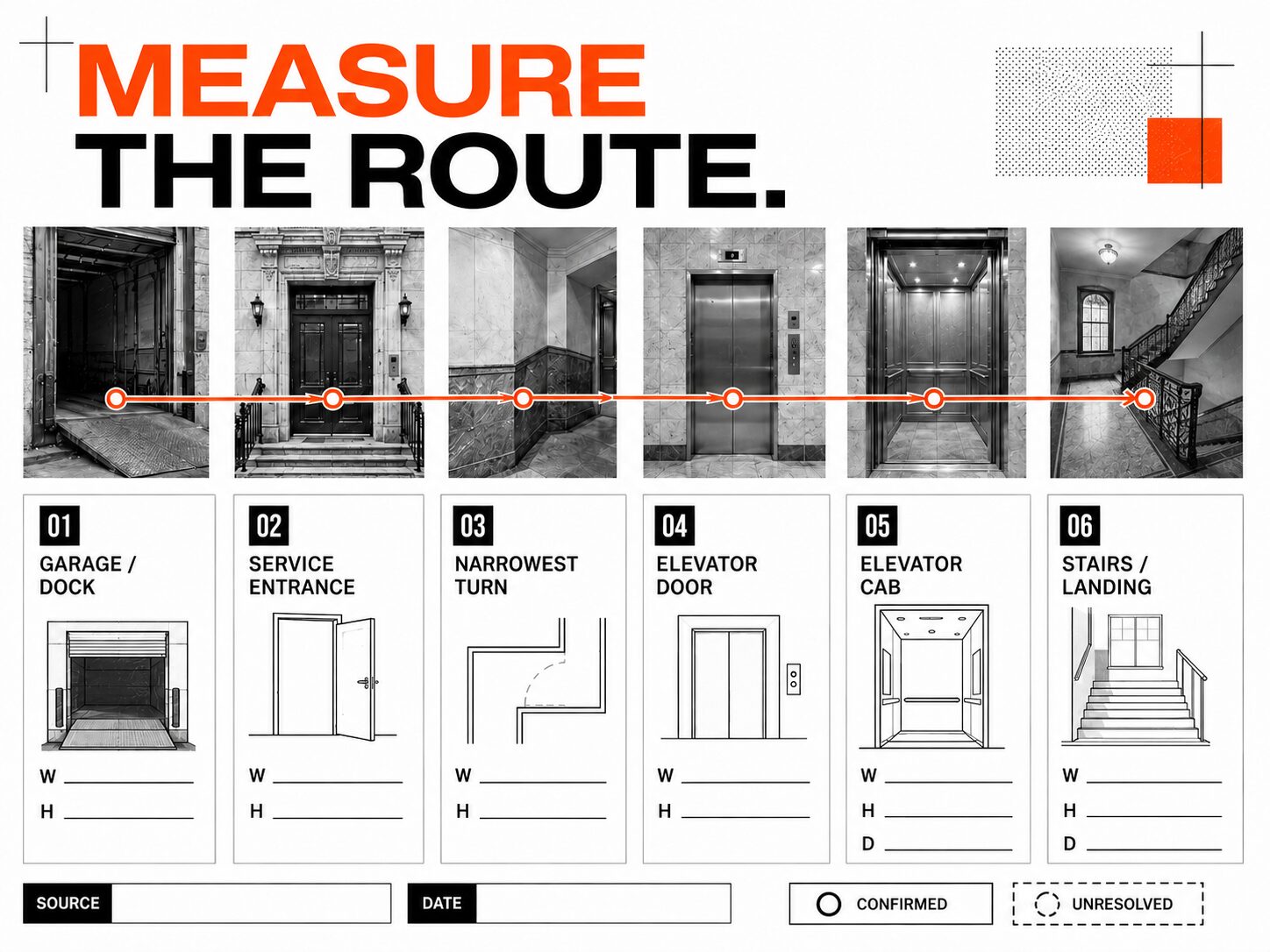
Then trace the route from the truck's expected loading point to the apartment:
- Curb, loading area, garage, or dock
- Check-in desk or security point
- Service entrance door
- Hallway, ramp, stairs, or turns
- Assigned elevator
- Apartment floor and unit
Record obstacles rather than describing the route as simply “easy” or “tight.” Note steps before the elevator, steep ramps, narrow doors, low clearances, sharp turns, long interior carries, and areas where building staff restrict access.
Measure the Openings That Could Change the Plan
For large furniture or equipment, ask for usable dimensions, not just the elevator's listed capacity. Useful measurements can include:
- Service entrance door width and height
- Elevator door width and height
- Elevator cab width, depth, and height
- Narrowest hallway or turning point
- Stair width, landing depth, and ceiling clearance
- Loading dock or garage height restriction
Label every measurement with its source. A number provided by management is different from one measured by the resident. If an important dimension remains unknown, mark it unresolved instead of estimating.
Confirm Building Paperwork and COI Instructions Exactly
Some buildings request insurance documentation, building forms, deposits, access passes, or other approvals. Do not convert those requests into a generic checklist. Ask each property to send its exact instructions.
If a building requests a Certificate of Insurance or related insurance documentation, record the requested names, wording, limits, submission address, contact, and review status exactly as provided. Forward the original instructions rather than paraphrasing them. A request for paperwork does not prove that it has been accepted, and one building's sample should not be reused for another property without confirmation.
For any fee or deposit, record the amount quoted by the property, payee, payment method, deadline, refund condition, and receipt status. Do not insert an estimated Manhattan fee into the packet. If management uses the word “permit,” ask whether it means a private building access pass, a property moving permit, or a city authorization connected to the location.
The packet should have a separate line for each requested item and a visible approval field. That keeps “management asked for it” separate from “management accepted it.”
NYC DOT Curb Rules vs. Building Loading Instructions
The building can identify its preferred loading point, but posted street rules still matter. NYC DOT's parking guidance says loading or unloading merchandise at curbside is allowed in a No Parking zone, while it is not allowed in No Standing or No Stopping zones. The agency also advises drivers to read the entire block because the more restrictive sign applies when multiple signs govern the same area.
Your packet should therefore record both pieces of information:
- The building's written loading or service-entrance instructions
- The posted curb restrictions that apply at the planned time
Do not label a loading point “reserved” unless the party with authority over that space has confirmed it. A preferred curb location and a legally available loading position are not always the same thing.
Confirm Keys, Fobs, Protection, and the Day-Of Handoff
Small access details can stop an otherwise organized move. Ask who opens the service entrance, who activates the elevator, and whether a key, fob, access code, or security check-in is required. Record when temporary access begins, who receives a borrowed item, and how it must be returned.
Also ask management who is responsible for any required protection in elevators, corridors, doors, floors, or lobby areas. Do not assume the building supplies it or that the moving company is automatically expected to install it. Put the confirmed responsibility next to the requirement.
Create a one-page move-day handoff card from the longer packet. It should show only the information the resident and moving team may need quickly:
- Origin and destination day-of contacts
- Approved access windows
- Check-in and service entrance locations
- Assigned elevators
- Loading instructions
- Keys, fobs, or access steps
- Unresolved exception, if one remains
- Time and source of the latest written confirmation
Keep the full emails and forms behind the card. The card is a quick reference, not a replacement for the building's policy.

Reconfirm the Packet Without Inventing a Universal Deadline
Instead of relying on one generic lead time, review the packet at three practical checkpoints:
- When the move date is proposed: Request the current move-out and move-in instructions from both properties.
- When responses arrive: Enter the exact rules, submit only what is requested, and track every item through approval.
- Before moving day: Reconfirm the final windows, contacts, entrances, elevator assignments, access items, and unresolved exceptions in writing.
If the building gives a deadline, use that deadline. If it does not, ask the approving contact when each item must be received. This approach respects property-specific rules without pretending every Manhattan building operates on the same schedule.
What to Include When You Request a Moving Quote
Access details can affect how a move must be planned. When requesting a quote, include both addresses and share the confirmed building information you already have: approved or proposed hours, elevator access, service entrances, stairs, loading points, long carries, large-item dimensions, and any instructions management supplied.
Do not mark unknown details as confirmed. Identify what is still pending so it can be reviewed as the plan develops.
Ready to take the next step? Start your moving quote and include the access details for both addresses.
Frequently Asked Questions
Do all Manhattan buildings require the same move-out paperwork?
No. Requirements are set by the property and can differ between the building you are leaving and the one you are entering. Ask both management contacts for their current written instructions and track each request separately.
Does every Manhattan apartment move require a Certificate of Insurance?
Do not assume that it does. Ask each building whether insurance documentation is required. If it is, obtain the property's exact instructions and confirm acceptance in writing. This article does not claim that Experia Moving can satisfy every building's insurance or COI requirements.
Is a freight elevator reservation enough to approve the move?
Not necessarily. Confirm the approved window, check-in process, service entrance, indoor route, loading instructions, staff contact, access items, requested paperwork, and final approval status. An elevator time can be only one part of the building's process.
Who confirms where the moving truck can load?
Ask building management for the property's loading instructions, then check the posted street restrictions for the planned time. A building can direct you to its service entrance or private loading area, but its instructions do not replace NYC curb rules.
What if one building has not answered before the quote request?
Mark the item pending and share what is known. Do not guess the hours, elevator type, entrance, dimensions, paperwork, or loading access. The packet is useful precisely because it separates confirmed facts from unresolved details.
Moving in New York?
Get a flat price in about three minutes, or leave a number and a move coordinator calls you back. Free COI, no deposit to hold a date.

Every fragile item gets its own crate.
Art, mirrors, marble, instruments. We build the box on site, and it travels flat, strapped and labelled.


